Portion Awareness
Portion Architecture — How Daily Eating Patterns Shape Weight Awareness
Eleanor Ashcroft
·
·
10 min read
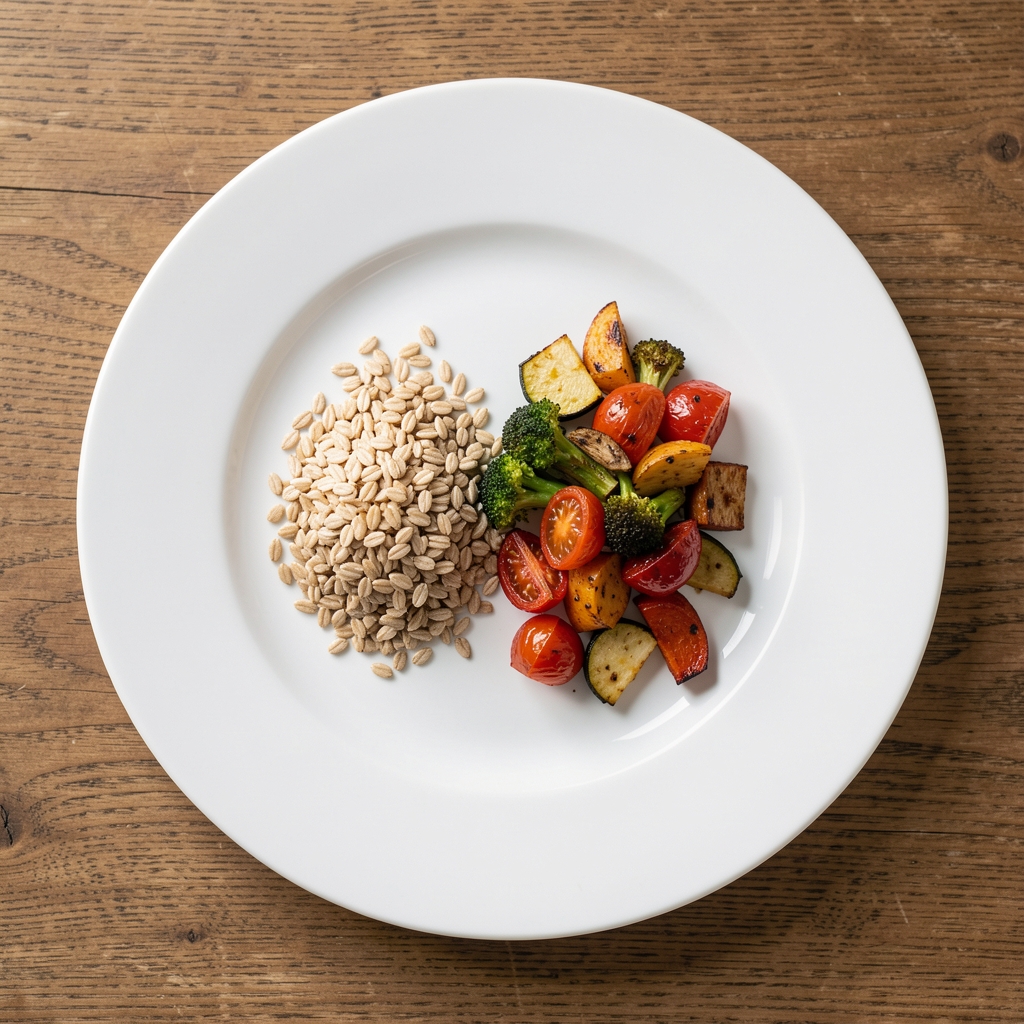
A food journal kept over twelve months will, almost without deliberate intention, become a seasonal document. The record of what was eaten in January differs from what was eaten in June not because a plan was followed, but because the available vegetables changed, and with them, the composition of the weekly plate.
The observation began, as many food journals do, without a specific hypothesis. The intention was simply to record — to note, at the end of each day, what had been eaten and in what combination. Over the first few weeks the record seemed to reflect only habit: the same lunches, the same evening patterns, the same default vegetables recurring with the regularity of a schedule.
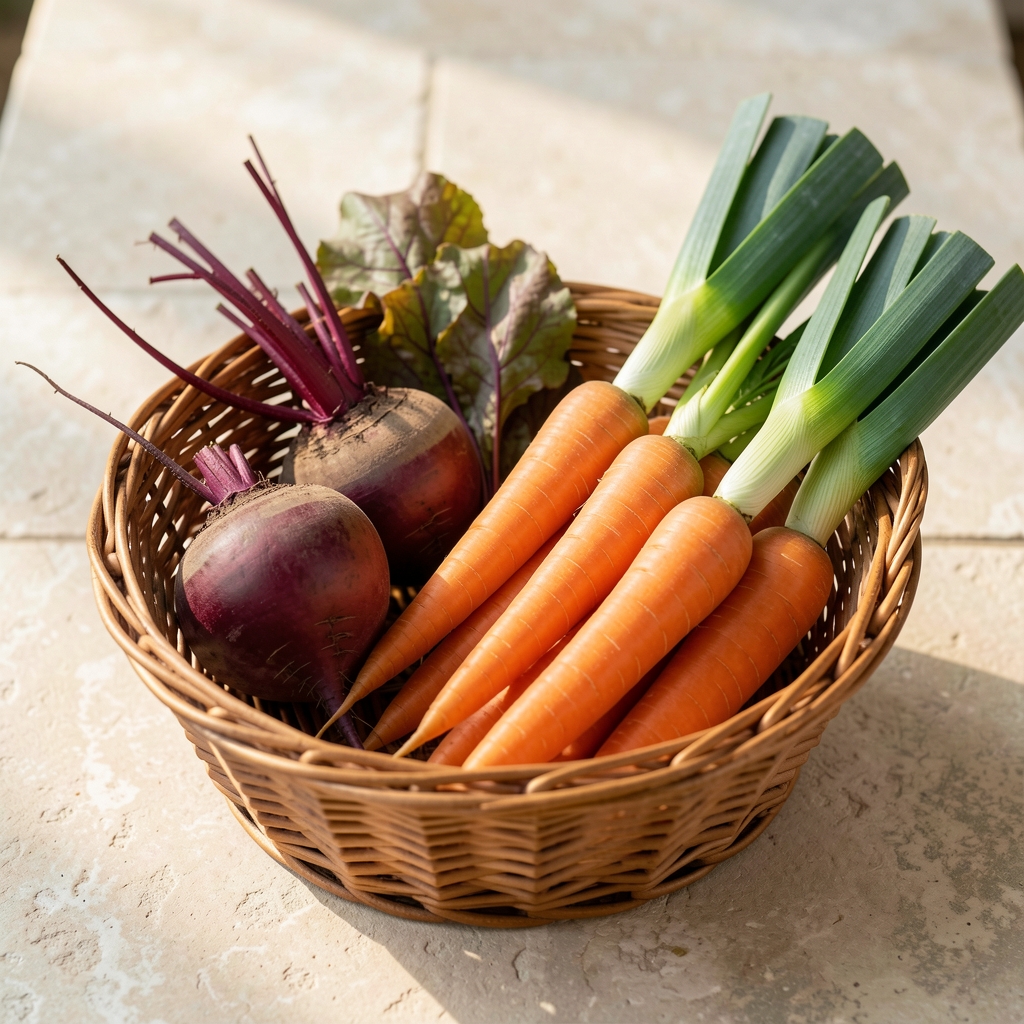
Then January gave way to February, and the courgettes and tomatoes that had appeared through late summer disappeared almost entirely from the weekly record. In their place: leeks, parsnips, sprouts, celeriac. The shift had not been planned. No list had been drawn up. The journal simply reflected what was present at the market and, later, what was available at a price that made it practical to buy in sufficient quantity.
What the journal documented — though this only became visible when reviewing entries across a full quarter — was a natural nutritional rotation. The seasonal shift that occurred in the vegetable selection was also a shift in fibre sources, micronutrient profiles, and preparation methods. Roasting root vegetables in winter produces a different dietary composition than the salads and raw preparations of summer. The caloric density of the plate changes; the ratio of cooked to raw changes; the presence of certain vitamins and minerals changes.

Winter selection, London, 2026
Published nutritional research has, over several decades, noted the relationship between dietary variety and nutritional balance. A diet that draws from a wide range of vegetables and fruits tends to distribute micronutrient intake more evenly than one that relies repeatedly on the same sources. The seasonal availability of produce is, historically, the mechanism through which that variety was introduced into diets: the foods that were present in spring were different from those of autumn, and so the year's eating, taken as a whole, covered more nutritional ground.
In a contemporary context, where most supermarkets carry a broad range of produce regardless of season, this rotational pattern is no longer automatic. The food journal reveals whether the seasonal shift is occurring in practice — and for many people who keep a careful record, it turns out not to be. The same core vegetables appear in the journal week after week throughout the year: broccoli, carrots, spinach, peppers. These are consistent and nutritionally solid choices. But the consistency itself, viewed over twelve months, represents a narrower nutritional range than seasonal eating would naturally produce.
Reintroducing a deliberate seasonal orientation to the weekly plate — buying what is visibly in season at a market rather than the supermarket default — expands that range. Celeriac in January, asparagus in April, courgette in July, squash in October: each introduces a different nutritional profile, a different preparation method, a different interaction with the rest of the week's eating.
"The journal kept over a single winter quarter documented eleven distinct vegetables. The same quarter the following year, with seasonal sourcing applied, documented twenty-three."
The connection between seasonal vegetable variety and body weight is indirect rather than causal. A seasonal diet does not produce weight change through any single mechanism. What it does is shift the composition of the plate in ways that tend to support nutritional balance: more fibre variety, more micronutrient breadth, more variation in caloric density across the year.
The food journal is useful here precisely because it makes the composition of the weekly plate visible over time. When the journal is reviewed at the end of a quarter, the pattern of vegetable selection becomes legible in a way that it is not during the week-to-week experience of eating. The observation that the same four vegetables have appeared in almost every evening meal for six weeks is not available to ordinary recall — but it is available to the journal.
This legibility is, in the view of the editorial team at Dreva Dispatch, the primary argument for food journalling in the context of weight awareness. Not the calorie count, not the macro breakdown — but the broader pattern that becomes visible when weeks are placed next to each other and the repetitions and absences can be seen. The seasonal calendar is one lens through which that pattern can be read.
Observation notes, food journal, 2026
The practical application of a seasonal food journal does not require an elaborate system. The core record is simple: at the end of each day, note which vegetables appeared in the day's meals and, where possible, note their source — market, supermarket, or seasonal delivery scheme. Within a week, a pattern is visible. Within a month, the seasonal character of the plate can be assessed.
The quarterly review is more revealing than the daily entry. Take the journal entries for a full quarter and list the vegetables that appeared. Note which appeared more than once per week and which appeared rarely or not at all. Then cross-reference against a seasonal produce guide for the current quarter — one that reflects the UK growing calendar rather than global supply chains. The gaps between what was eaten and what was in season are, for most people, significant.
The goal is not to eliminate all non-seasonal produce or to construct a historically authentic diet. The goal is to use the seasonal calendar as a guide to variety — to introduce unfamiliar vegetables into the weekly rhythm because they are present and available, and to observe, over subsequent entries in the journal, what changes in the plate's composition as a result.
A food journal kept across a full year and reviewed at its end will show something that is not visible during the year itself: the shape of the annual eating pattern. The seasonal spread of the vegetable selection across twelve months is the most direct indicator of whether the diet is achieving the variety that nutritional research associates with a broad micronutrient profile.
The relationship between that variety and body weight is, again, indirect. Weight is influenced by a wide range of factors that the journal will document imperfectly at best. But the journal is not primarily a weight-management tool. It is a record. The seasonal dimension of that record is one of the most instructive patterns available for examination — a natural structure, embedded in the calendar, through which the composition of the weekly plate can be periodically assessed and adjusted without reference to restriction or exclusion.
The editorial team at Dreva Dispatch returns to this observation in several of its long-form pieces: that the most sustainable approaches to nutritional balance are those that work with the natural structures already present in everyday life. The seasonal calendar is one such structure. The food journal is a tool for making that structure visible. Used together, they constitute a low-intervention approach to understanding how the plate changes over time — and what those changes mean for the broader question of weight and nutritional balance.

Eleanor Ashcroft is lead editor at Dreva Dispatch. Her long-form writing draws on over a decade of observational practice in food research and nutrition writing, based in London.
More from Eleanor Ashcroft →